
How to Start a Blog in Pakistan in 2026: A Complete Beginner Guide
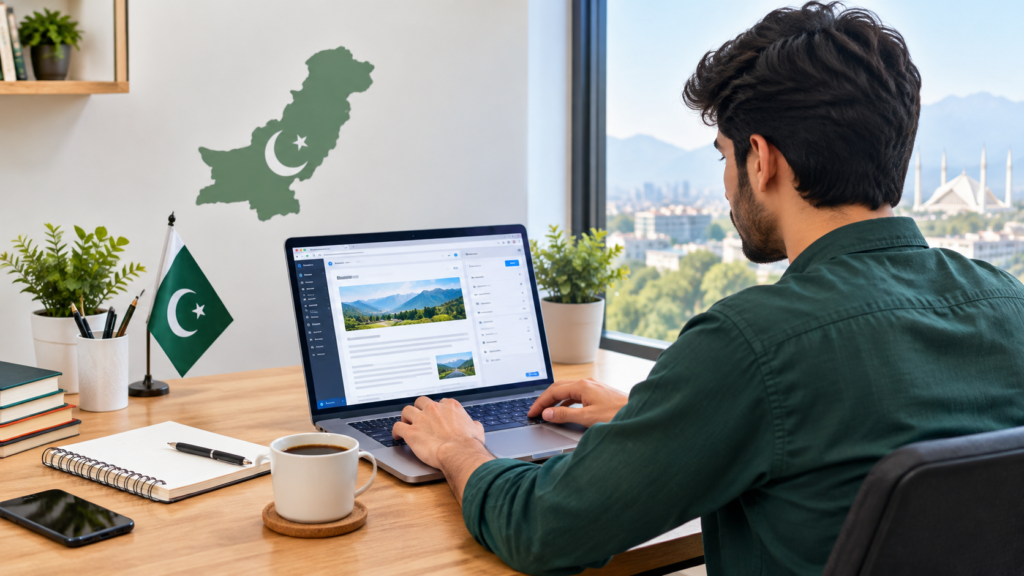
Have you been searching for how to start a blog in Pakistan but don’t know where to begin? Starting a blog is easier than many beginners think. You do not need advanced coding skills or a large budget. With the right niche, a domain name, hosting, WordPress, and a simple content strategy, you can build your blog from scratch.
This guide explains how to start blogging in Pakistan step by step and how to build a website that can grow through Google search, social media, and other traffic sources.
What Is a Blog?
A blog is a website where you regularly publish useful articles, guides, opinions, tutorials, news, or other types of content.
For example, you could create a blog about:
- Technology and AI
- Education
- Freelancing
- SEO and digital marketing
- Mobile phones
- Travel
- Food and recipes
- Personal finance
- Online tools
The most important thing is to choose a topic that you can continue writing about and that has an audience.
Step 1: Choose a Blogging Niche
The first step is choosing a niche. A niche is the main subject your blog will cover.
If you are a beginner, avoid creating a website about everything at once. A focused website makes it easier to create relevant content and build topical authority.
For example, instead of targeting the broad topic “technology,” you could start with:
AI tools for students
Then publish articles such as:
- Best AI Tools for Students
- Free AI Writing Tools
- Best AI Study Tools
- How to Use AI for Research
- AI Tools for Pakistani Students
This approach gives you multiple related topics while keeping your website focused.
Step 2: Choose a Domain Name
Your domain is the address people use to visit your blog, such as example.com.
Try to choose a domain that is:
- Short and easy to remember
- Easy to spell
- Relevant to your brand
- Professional
- Easy to pronounce
A .com domain can work well if you want an international audience, while a .pk domain can be useful when your content is specifically focused on Pakistan.
Do not make your domain unnecessarily long just to include keywords. A memorable brand name can be more useful in the long term.
Step 3: Buy Web Hosting
After choosing your domain, you need web hosting.
Hosting stores your website files and makes your blog available to visitors online. Beginner-friendly WordPress hosting generally provides tools for installing WordPress without manually configuring a server.
When choosing hosting, look for:
- Good website speed
- Reliable uptime
- SSL support
- Regular backups
- WordPress compatibility
- Good customer support
- Easy website management
Do not choose a hosting company based only on the cheapest introductory price. Check what the renewal price and included features are before purchasing.
Step 4: Install WordPress
For a serious blogging website, WordPress is a practical choice because it gives you control over your content, design, SEO, and plugins.
Most modern hosting services provide a simple WordPress installation process.
After installation, log in to your WordPress dashboard and configure your website.
Start with a clean, lightweight and mobile-friendly theme. You do not need an expensive design when launching your first blog.
Step 5: Create Important Pages
Before publishing lots of articles, create the basic pages your visitors need.
Your blog should normally have:
- Home
- About Us
- Contact Us
- Privacy Policy
- Terms & Conditions
- Disclaimer
These pages help visitors understand who is behind the website and how the site operates.
For Omni Blogs, you should also make sure your branding, contact information, navigation and categories are consistent across the website.
Step 6: Find Low-Competition Keywords
This is one of the most important parts of blogging.
Instead of trying to rank immediately for extremely broad keywords such as:
“technology”
target more specific searches such as:
“best AI tools for students in Pakistan”
or:
“how to start a blog in Pakistan”
Long-tail keywords are usually more specific and can make it easier to create content that directly answers a searcher’s question.
Before writing an article, ask:
What exactly does the person searching this keyword want to know?
Then make your article the best possible answer.
Step 7: Write Helpful Content
Do not write an article simply to insert a keyword.
Write for the person who is searching.
For example, someone searching “how to start a blog in Pakistan” probably wants practical information about:
- Choosing a niche
- Buying a domain
- Getting hosting
- Installing WordPress
- Creating important pages
- Writing the first article
- Basic SEO
- Getting visitors
- Monetizing the blog
Covering these questions in a clear order makes the article more useful.
Use short paragraphs, descriptive headings, bullet points, examples, and images where they genuinely help.
Step 8: Optimize Your Article for SEO
Basic on-page SEO can help search engines understand your content.
For every important article:
- Use your main keyword naturally in the title.
- Write a useful meta description.
- Create a clear URL.
- Use relevant H2 and H3 headings.
- Add descriptive image alt text.
- Link to relevant articles on your own website.
- Link to trustworthy external sources when appropriate.
- Make the page easy to read on mobile devices.
- Avoid keyword stuffing.
Most importantly, make the article genuinely useful rather than writing only for search engines.
Step 9: Publish Consistently
You do not need to publish five articles every day.
A better strategy is to create useful content consistently.
For example, you could start with:
2–3 quality articles per week.
After publishing your first 20–30 articles, check which topics are getting impressions and clicks. You can then create more content around topics that show potential.
Remember that SEO is not an overnight process. A new website usually needs time to build authority, earn links, and establish search visibility.
Step 10: Promote Your Blog
Publishing an article does not guarantee visitors.
Share useful articles through platforms where your audience spends time, such as:
- X
- Relevant online communities
- Email newsletters
You can also build relevant backlinks through legitimate outreach, partnerships, digital PR, and useful resources.
Avoid buying large numbers of low-quality or spammy backlinks simply to increase backlink counts.
Step 11: Connect Google Search Console
After launching your blog, connect it with Google Search Console.
This allows you to monitor how your website appears in Google Search and identify queries that bring impressions and clicks.
Use the data to improve your content.
For example, if an article starts receiving impressions for a related keyword that you did not originally target, you may be able to improve the article to answer that query more completely.
Step 12: How Can You Make Money From a Blog in Pakistan?
Once your blog starts receiving relevant traffic, there are several potential monetization methods.
Google AdSense
You can potentially earn from advertisements displayed on your website, subject to Google’s requirements and approval.
Affiliate Marketing
You can recommend relevant products or services and earn a commission when visitors make qualifying purchases through your links.
Sponsored Content
Established blogs may receive opportunities to publish sponsored articles or brand collaborations.
Digital Products
You can eventually sell ebooks, templates, courses, tools, or other digital products related to your audience.
Your Own Services
A blog can also generate leads for services such as SEO, content writing, web design, consulting, or digital marketing.
Common Blogging Mistakes to Avoid
New bloggers often make the same mistakes.
1. Choosing a Topic Only for Money
If you have no interest or knowledge in a topic, consistently producing useful content can become difficult.
2. Targeting Extremely Competitive Keywords
A new website usually should not begin by targeting the biggest keywords in an industry.
Start with specific, useful search queries.
3. Publishing AI Content Without Editing
AI can help with research, outlines and drafting, but blindly publishing generic content can make your website less useful.
Add your own experience, examples, analysis, screenshots, original information, and useful insights.
4. Keyword Stuffing
Repeating the same keyword again and again does not make an article better.
Use natural language and related terms.
5. Ignoring Website Speed
A slow website creates a poor user experience. Keep your design lightweight and optimize images before uploading them.
How Much Does It Cost to Start a Blog in Pakistan?
The cost depends on your domain, hosting plan, theme, plugins and other services.
At the basic level, you need:
Domain + Web Hosting + WordPress
WordPress itself can be installed on compatible hosting, while your main expenses are usually the domain and hosting. Current Pakistan-focused hosting guides also recommend comparing domain costs, hosting features, renewal pricing, and performance before choosing a provider.
You can start small and upgrade your hosting as your website grows.
Final Thoughts
If you are wondering how to start a blog in Pakistan, the process is straightforward: choose a focused niche, register a good domain, purchase reliable hosting, install WordPress, create useful content, optimize your pages for search, and promote your website.
The biggest mistake is expecting overnight results.
Focus on creating genuinely helpful content and improving your website over time. With consistency and a clear strategy, a blog can become a valuable source of traffic, knowledge, leads, and potentially income.
Start small, publish useful content, learn from your results, and keep improving.